

Solitary confinement in prisons and its alternatives were discussed in Strasbourg
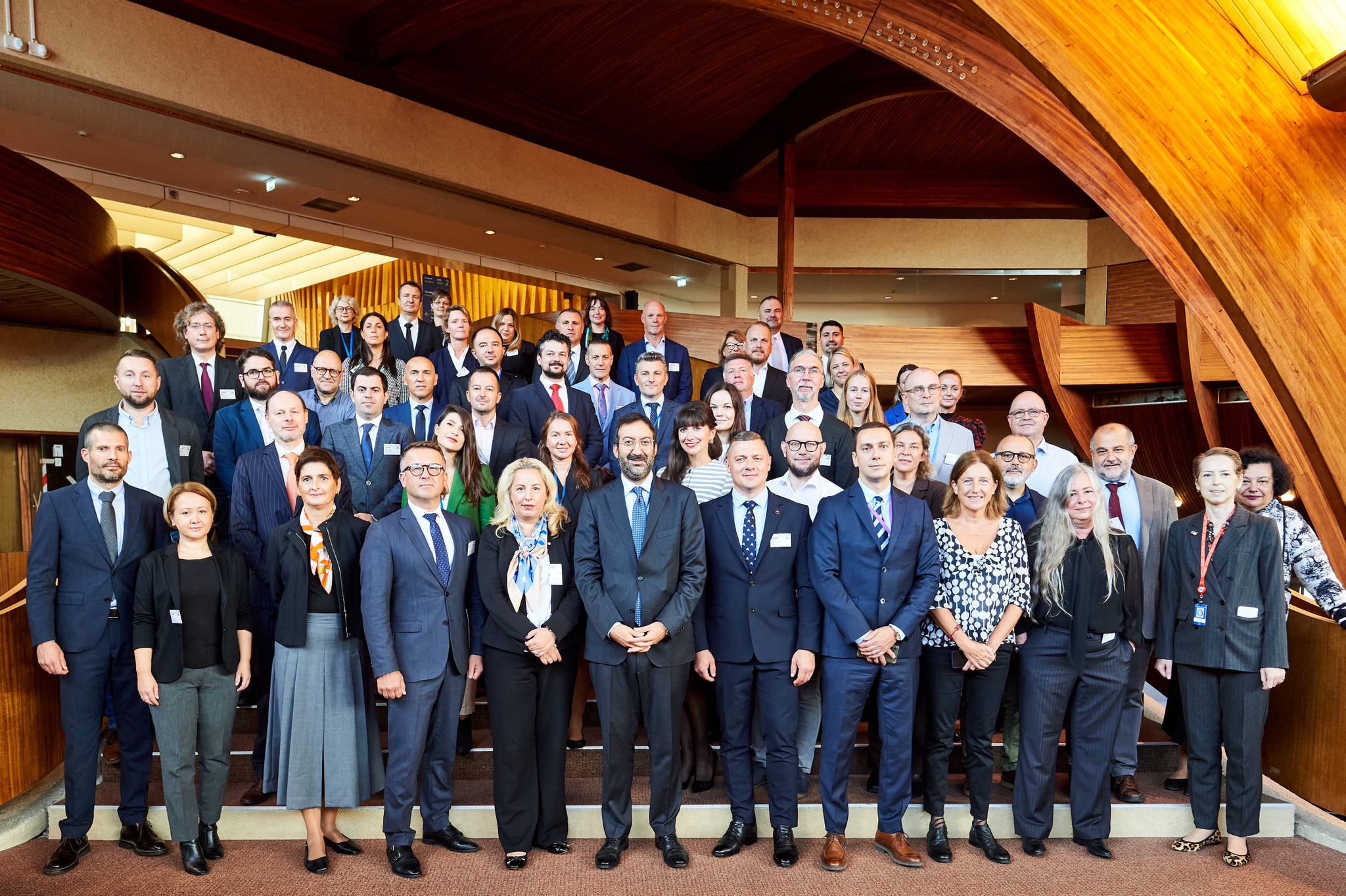
On 24-25 September, Rokas Uscila, Deputy Minister of Justice of Lithuania, and Mindaugas Kairys, Director General of the Lithuanian Prison Service, participated in the regular meeting of prison administration representatives from 35 Council of Europe member states, held in Strasbourg, France.
Many studies suggest that solitary confinement is often extremely damaging for prisoners’ physical and mental health and not conducive to their resocialisation. These were the main topics discussed in Strasbourg.
Opening the event, Gianluca Esposito, Director General of Human Rights and Legal Affairs emphasised that many Council of Europe and other international standards and legal instruments require solitary confinement to be used only as the measure of last resort and for a shortest possible duration, while certain categories of prisoners such as minors or pregnant women, among other, should under no circumstances be subjected to it.
During the two days the participants received first-hand information on the Council of Europe standards, as well as on the standards and findings of the CPT and the latest case-law of the European Court of Human Rights regarding the use of solitary confinement across the continent. These presentations were supplemented by an overview of the possibilities of the Council’s co-operation sector in helping member states to adapt and implement these standards and judgments of the Court on the national soil.
Several member states presented their national experience and good practices with respect to minimising the damaging effects of solitary confinement and preserving the dignity of inmates in isolation, as a source of inspiration for their peers. A special interactive session of the event was dedicated to the International Guiding Statement on Alternatives to Solitary Confinement, issued by an international group of experts under the auspices of Associazione Antigone, an Italian NGO, and Physicians for Human Rights Israel in January 2022. Guided by Council of Europe consultants, the national delegates reflected on the practical implementation of possible alternatives to solitary confinement in the daily life in prison, monitoring of such measures and developing the necessary skills through staff training.
During the meeting, the Lithuanian representatives Rokas Uscila and Mindaugas Kairys shared insights into Lithuania's experience with the use of solitary confinement in the country’s prisons.
The event provided the participants with ample opportunities for networking with colleagues from other countries and developing contacts for future bilateral exchanges and mutual learning.
Through bilateral co-operation activities and projects, the Division for Cooperation in Police and Deprivation of Liberty plays a major role in assisting the beneficiary countries to integrate the Council of Europe standards in their penitentiary, probation and law enforcement institutions. The work related to prisons, probation and the police is an integral part of the overall work of the Council of Europe related to human rights, democracy and the rule of law, the three pillars of the raison d’être of the Organisation, in accordance with its Statute. The main objective is to help the Member States improve their legislation and practice related to the work of the police as well the execution of penal sanctions and measures.
Based on information from the Council of Europe website (www.coe.int)