

International Erasmus+ Project in Warsaw: Experiences from Polish Prisons
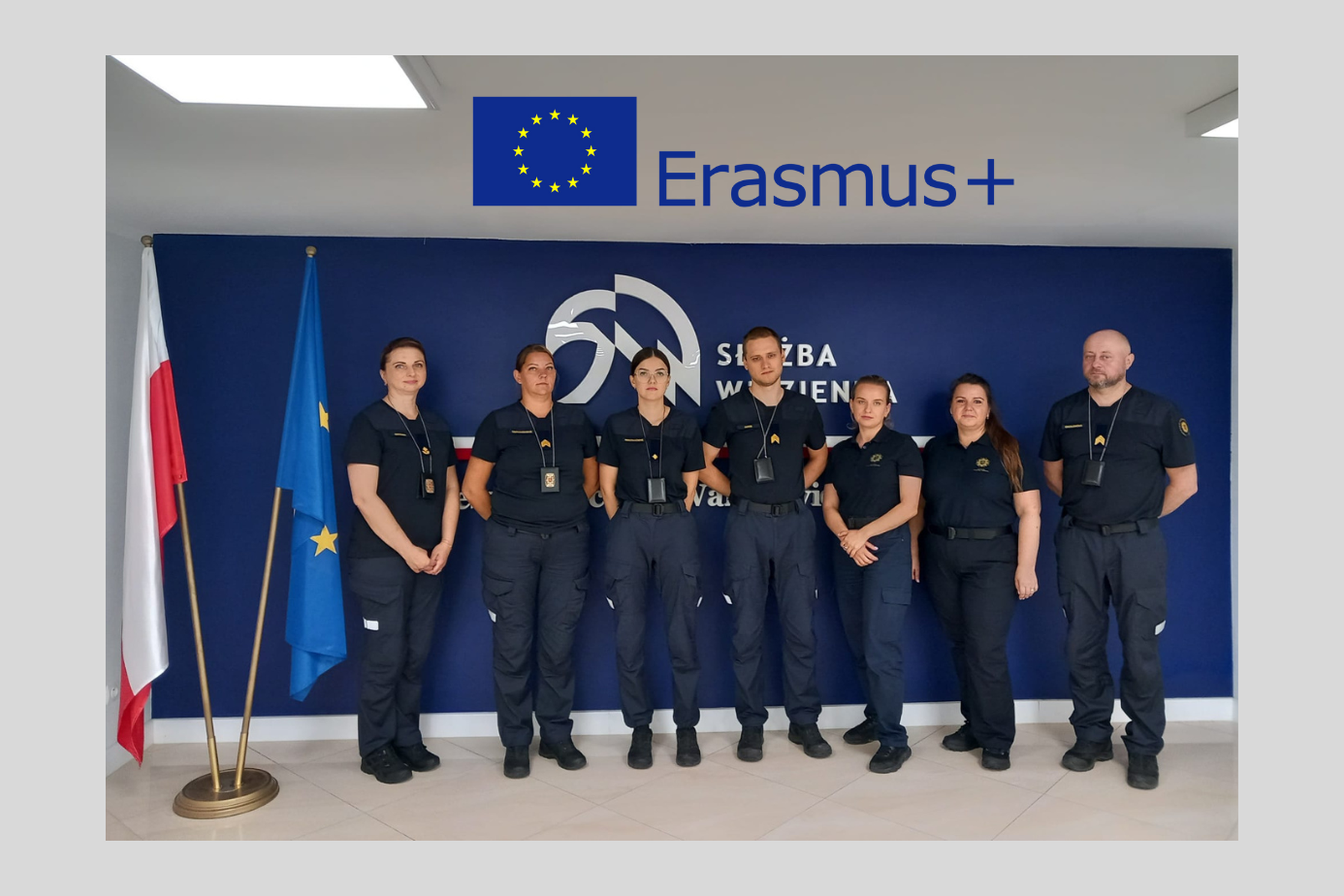
From 21–23 July 2025, representatives of the Lithuanian Prison Service participated in an international study visit to Poland within the framework of the Erasmus+ project “Enhancing the Competences of Correctional Staff through the Dynamic Security Model.” The visit provided participants with an opportunity to gain valuable professional experience and insight into the principles of dynamic security, resocialization practices, and organizational approaches applied in Polish correctional facilities.
During the visit, the Lithuanian delegation visited three facilities:
- Warsaw–Służewiec Remand Centre
- Warsaw–Białołęka Remand Centre
- Warsaw–Grochów Remand Centre
The Warsaw–Białołęka Remand Centre, one of Poland’s largest men’s prisons, accommodates both first-time offenders and reoffenders. The facility is characterized by a strict internal layout consisting of nine separate wings connected by one-way underground corridors to reduce inmate contact. Despite the high level of security, the institution fosters rehabilitation through diverse resocialization programs, including education, vocational training, therapeutic interventions (such as methadone treatment), and creative workshops. Prisoners are also employed in various activities, from construction to library work, and receive remuneration in line with the national minimum wage.
The Warsaw–Służewiec Remand Centre focuses primarily on the supervision of temporarily detained persons and those requiring therapy, particularly individuals with addictions. The facility operates two dedicated therapeutic units — for youth and adults — offering structured treatment for alcohol and drug dependency. Notably, the centre maintains a well-organized and aesthetically pleasing environment, featuring extensive greenery and landscaped areas that contribute to a positive atmosphere for both staff and inmates.
The Warsaw–Grochów Remand Centre, the only women’s prison in the Warsaw region, is dedicated to the rehabilitation and resocialization of female prisoners. The facility also temporarily accommodates men performing household and maintenance duties. A wide range of educational, vocational, and cultural activities is organized, including training courses for cooks, tailors, and hairdressers, as well as theatre groups and a prison magazine. In some programs, women are granted limited, supervised access to digital platforms, allowing them to publish content on social networks under the guidance of social workers — a unique approach supporting social reintegration.
Participation in the Erasmus+ project offered not only an opportunity to acquire international professional experience, but also to exchange best practices, strengthen institutional partnerships, and foster the implementation of innovative correctional approaches in Lithuania.
This initiative represents a significant step toward the continued development of the Dynamic Security Model, which emphasizes trust, proactive engagement with inmates, and the enhancement of staff competencies in daily correctional work.
*This project is funded by the European Union. The content of this publication reflects the views of the author only and neither the National Agency nor the European Commission can be held responsible for any information contained herein.