Establishing Quality Lithuanian Correctional System: Strengthening the Rule of Law
The Lithuanian Prison Service has implemented the Project Development of Quality-Based Lithuanian Correctional Service System under the EEA and Norwegian Financial Mechanisms programme Justice and Home Affairs 2014–2021. This initiative has established a solid foundation for reforming the national correctional system and has made a substantial contribution to enhancing the justice system.
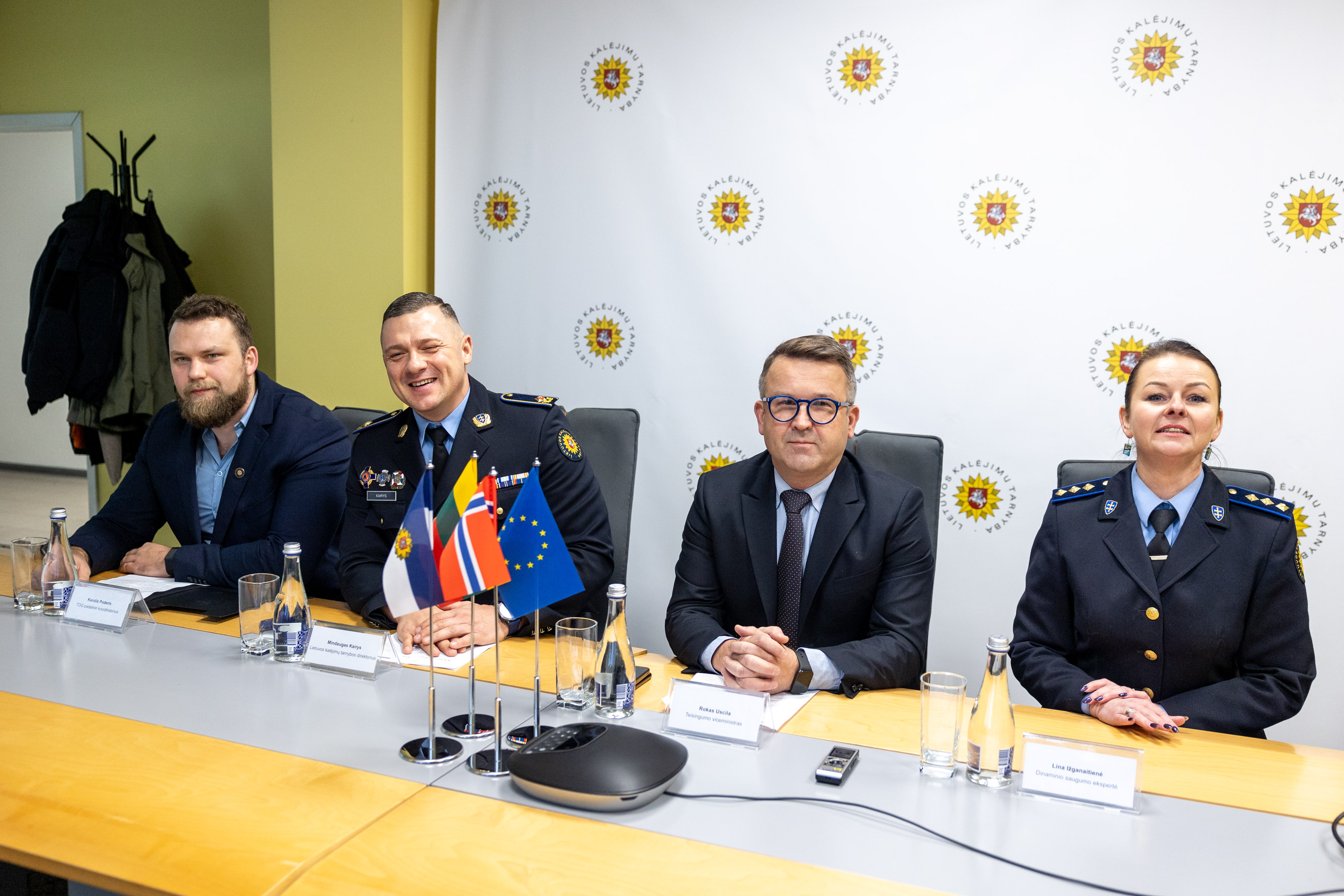
"The project has successfully achieved its main objectives: to develop a system of professional education, training, and competence building for the correctional staff of the Lithuanian Prison Service; to improve conditions for the detention and resocialization of inmates; and to enhance the working conditions for employees," stated Mindaugas Kairys, Director General of the Lithuanian Prison Service.
Rokas Uscila, Deputy Minister of Justice, emphasized the impact of the project Development of Quality Based Lithuanian Correctional Service System on implementing structural and qualitative changes in the correctional system.
"The project facilitated the introduction and development of progressive elements within the correctional system, including specialized behavior modification programs, risk assessments for minors likely to reoffend, and advanced methods for managing high-risk inmates. It also supported the principles of transparency and constructive cooperation with NGOs, now enshrined in the new Code on the Enforcement of Sentences. These efforts have established conditions for enforcing sentences that comply with human rights standards. Importantly, the project focused on transferring the experience of the Dynamic Security Model to Lithuania. This initiative represents a landmark transformation in Lithuanian prisons and probation services, significantly contributing to public security in Lithuania," said R. Uscila.
During the project period, significant advancements were achieved in the resocialization of inmates, and reintegration measures were introduced. Based on best practices from Norwegian partners, TOG units for re-offenders were established at Pravieniškės Prison No. 1 and Vilnius Prison, alongside the implementation of pilot Dynamic Security Models in these facilities. Six NGOs played a vital role in these prisons, offering a range of services to inmates, including: training and social skills development, professional support for individuals with substance abuse disorders, psychological, legal, and individual counseling, assistance to foreign nationals serving sentences, such as family reconnection and adapting prison spaces to their needs. In total, over 2,300 inmates participated in these NGO-led initiatives.
In collaboration with the Lithuanian Probation Service, several behavior modification programs were introduced, including anger management, a drink-driving prevention program, and substance misuse interventions. The project also focused on integrating e-services, alternative sanctions, and electronic monitoring. Key developments included: modernizing the Lithuanian Prison Service Information System (KADIS) and introducing the eSTART:AV tool, a digital solution for assessing the criminal risk of individuals under 24.
The project has significantly improved the professional development of prison and probation staff. Milestones include: LUP Leadership Platform training for prison staff and Dynamic Security training for 130 participants, publishing the Methodological Handbook on Dynamic Security in Prisons back in 2023, now widely applied in practice and organizing training for lecturers and internships in Lithuania and Norway. Moreover, a new staff training center was established in Antaviliai.
A major achievement of the project was the development of the national halfway house network, inspired by the Norwegian model. Eight halfway houses, with a combined capacity of 192 places, were established in Vilnius, Pravieniškės, Kaunas, Alytus, Marijampolė, Panevėžys, Šiauliai, and Tauragė. These facilities serve as transitional spaces between incarceration and release, employing modern resocialization measures. Strategic plans include opening three additional halfway houses in Vilnius, Kaunas, and Utena.
In the next financial period, the project will continue with a focus on staff qualifications and retention, further improving working conditions, and expanding other key activities.
We extend our gratitude to all contributors supporting the growth and improvement of the Lithuanian correctional system.