

Erasmus+ Mobility Visit to Estonia
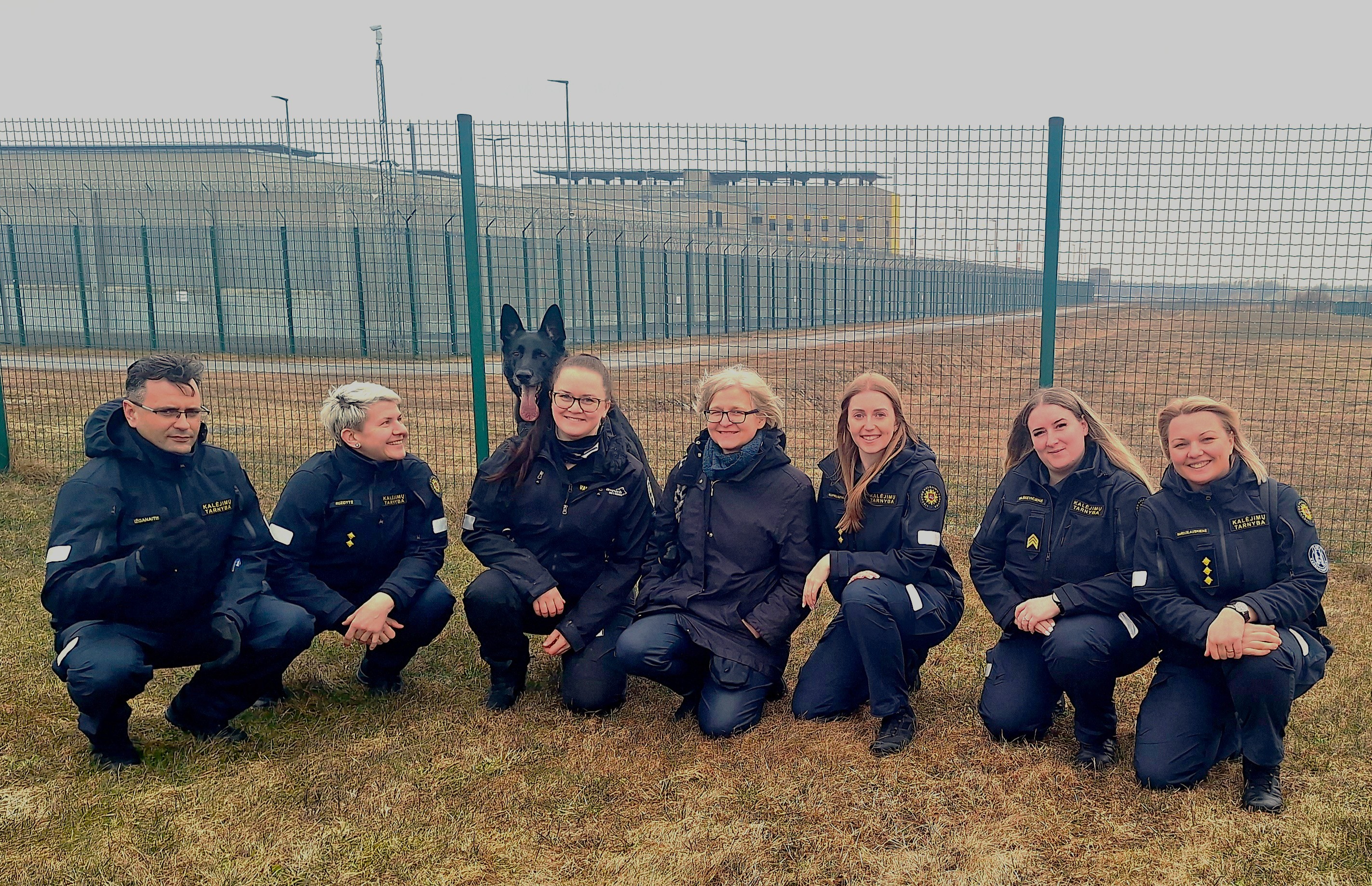
As part of the Erasmus+ project, six officers from the Lithuanian Prison Service undertook a mobility visit to Estonia to deepen their understanding of contemporary correctional practices, strengthen professional competencies, and develop their English language skills in an international setting.
The delegation, comprising specialists from the Security Coordination and Control, Security Management, and Resocialisation Units, engaged in a comprehensive programme designed to foster knowledge exchange and professional development. A central part of the visit was the Lithuanian team’s engagement with the Estonian Academy of Security Sciences (EASS) in Tallinn—a leading European institution for internal security education. EASS is notable for being the only academy in Europe that provides integrated education in all internal security fields, including police, border guard, rescue, tax and customs, and prison service. The academy’s state-of-the-art infrastructure, modern teaching methods, and centralized training model offer a compelling example of excellence in professional education. The Prison Service College is unique in that it is the only one that trains Estonian prison officers with a professional background.
The Lithuanian Prison Service representatives visited Viru Prison, where they received a comprehensive overview of the facility's structure, operational principles, and staff responsibilities. During their visit, they had the opportunity to observe the functioning of various departments, gaining insight into day-to-day operations.
The delegation also spent three days at Tallinn Prison—Estonia’s newest and largest correctional facility, inaugurated in 2018 to meet modern standards for both inmates and staff. There, they observed the full spectrum of daily operations, from morning roll call to evening shift transitions, offering a close-up view of correctional officers’ routines and responsibilities.
Participants were introduced to Estonia’s risk assessment and case management processes, as well as a range of rehabilitation, social reintegration, and recreational programmes designed to support inmates’ development. They also took part in intake and registration procedures, observed the organisation of inmate visits, and engaged with staff from both the Internal Investigations Department and the Cynology Department, learning about their respective roles and practices. By job shadowing their Estonian colleagues, the Lithuanian officers gained valuable insights into the role of contact officers, the benefits of the dynamic security model, and the key elements contributing to reduced recidivism in Estonia.
Throughout the visit, a key focus was placed on identifying transferable practices in correctional officer training, work organisation, and internal communication that enhance institutional safety and operational efficiency. The Estonian model showcased advanced methods of task distribution, teamwork, and interdepartmental cooperation that directly contribute to lowering re-offending rates and creating safer environments for both staff and inmates. The experience provided a deeper understanding of progressive correctional strategies and offered practical examples that may inform future developments within the Lithuanian correctional system.
The visit by representatives of the Lithuanian Prison Service, which took place from 24 to 28 March, marked the third mobility visit under the Erasmus+ project “Enhancing the Competences of Correctional Staff through the Dynamic Security Model.”
This project is funded by the European Union. The content of this publication reflects the views of the author only and neither the National Agency nor the European Commission can be held responsible for any information contained herein.

