

Dynamic security training for managers
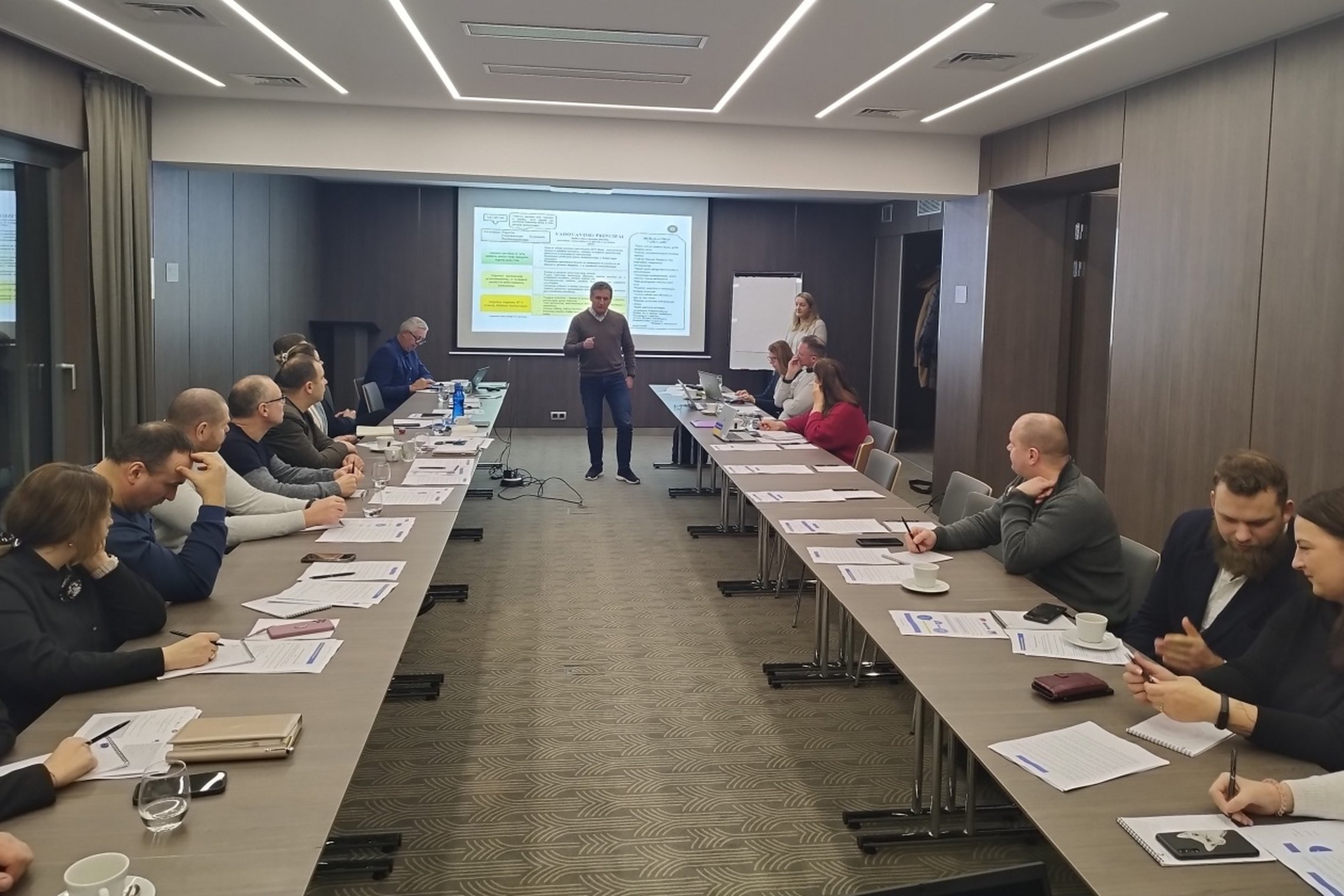
On 29 – 30 November 2022, the management training Practical Implementation of Leadership Principles on dynamic security took place in Vilnius.
The Project Development of Quality Based Lithuanian Correctional Service System(PDP 3) implemented under the EEA and Norwegian Financial Mechanisms programme Justice and Home Affairs 2014-2021 aims to improve the quality of services provided to bring them in line with the European and international human rights standards and to build the management competencies implementing dynamic security in practice.
Senior officials and staff from the Prison Department, Vilnius Correction House and Pravieniškės Correction House-Open Prison Colony participated in the leadership training. The training was delivered by the Norwegian experts and prison managers: Torunn Hasler, Senior Adviser of International Unit, Norwegian Correctional Service, Ida Lindmo, Head of the Kongsvinger Unit, Innlandet Region in Norway, Ole Stageberg, Senior Adviser at the University College of Norwegian Correctional Service (KRUS), Sven-Erik Skotte, Legal expert at KRUS, Jan Korsvold, Head of prisons, Innlandet Region in Norway, Jurate Cepulis, lawyer at the Kongsvinger Unit, Innlandet Region in Norway, interpreter.
Torunn Hasler, Senior Adviser of Norwegian Correctional Service, reminded the participants of the 10 main project activities in the field of competence building and resocialisation of inmates:
- Improving and developing dynamic security. A concept has been developed, a definition has been established, and a handbook on dynamic security will be published shortly. Developing dynamic security requires organisational conditions, teamwork and commitment. There will be an exchange of internships organised between the Norwegian and Lithuanian officers working in direct contact with inmates on sharing knowledge on the appropriate use of dynamic security and the role of the contact officer.
- Strengthening the activities of the Training Centre. Adaptation of training programmes focused on the competences needed to use dynamic security. Program for student supervisors.
- Leadership training. Establishing leadership principles, developing management competences, educating managers to properly support the dynamic security approach.
- Acquisition and implementation of rehabilitation programmes for inmates. Anger Management Program, Program to Prevent Drunk Driving, Substance Abuse Program and TOG – Prolific Reoffenders Program.
- Involvement of NGOs.
- Developing employment measures in the two centres.
- Conflict reduction program. The program will be adapted from KRUS. The program focuses on conflict management tools and skills, making maximum use of communication techniques and only in the last resort using physical control.
- Electronic monitoring – the tool for the probation service.
- Establishment of halfway houses.
- Digital training video films for trainings (TOG – instructors/ lecturers trained). Ongoing dynamic security trainings.
All of these activities, as Torunn Hasler emphasised, are closely interlinked, reflecting the strengthening of the principle of normality in the penitentiary system, the use of the dynamic security approach, which aims to improve working relationships, enhance security and motivate inmates to change.
Jan Korsvold underlined the responsibility and the task of a manager to ensure that changes take place, that dynamic security is in place, and that staff feel supported and assisted. He reminded that a leader needs to be engaged with staff, talk to them, listen to them, follow the values and set an example.
Participants had active discussions in groups on what kind of support staff need from their manager and how to put it into practice. Respect, openness, trust and a good relationship were the prevailing aspects in all the proposals.
The insights and needs of the officers who participated in the dynamic security training (TOT) were presented. The participants discussed how they could put them into practice. It was valuable to see representatives from all the different units discussing how they can contribute to reducing insecurity among staff, unanimously agreeing that the emotional and psychological state of staff is important and cannot be ignored, and that it is necessary to talk to staff as much as possible, to listen to their problems and suggestions, and to change the situation together. A manager should ask staff the main question "How do you feel at work and what can I do to make you feel better?", not to go around looking for mistakes.
There was an important discussion among the participants on how the use of dynamic security will affect each unit, and what each unit can do specifically to contribute to the implementation of this approach – Security Management, Resocialisation and Criminal Intelligence. Representatives of each unit highlighted the key points.
Security Management Unit sees the need for all staff to receive training, proposes to include the implementation of dynamic security in the annual tasks, initiate the introduction of common spaces and rooms for inmates and staff to communicate together, participate as much as possible in common meetings and discussions with other units, have discussions within the unit, organise case discussion groups, organise informal events and ask for the opinion of staff. It was emphasised that dynamic security is very important for the Security Management Unit, enhancing security and facilitating work.
Criminal Intelligence Unit: in the context of the development of the dynamic security approach, the representatives of this unit informed about their commitments to communicate and cooperate more with other units, become more open, be known, understood and trusted by other staff, participate more in common activities with inmates and officers, share relevant information with other units, share insights about the inmate, and provide a wider description of an inmate so the staff members get to know him/her better.
Resocialisation Unit welcomed the fact that the use of the dynamic security approach will not only enhance the safety of all, but will also make resocialisation a common goal for all units, and will increase the number of staff who will communicate with an inmate and exchange information, thus ensuring openness, trust, quality and continuity of services. However, it is clear that many staff need to strengthen their competences, especially in the areas of ethics, human rights and communication.
The two days of training were both busy and productive. The work is ongoing and the understanding and knowledge gained from the discussions should be used in everyone's daily activities.
Last updated: 24-04-2024
Related news:
An Overview of the Norway Grants Period and the Outcomes Achieved
Lithuanian Prison Service Opens Second TOG Unit at Vilnius Prison
Partners from Norway visit Marijampolė and Kaunas prisons
Cadets from Competence Development Centre Gain Valuable Insights from Norwegian prisons